Differential Item Functioning in Clinical Outcome Assessment Research
Recent trends and insights




Background
As interest grows in ensuring COAs perform consistently across diverse populations, evaluating Differential Item Functioning (DIF) is becoming increasingly important. Yet DIF detection in COA research remains inconsistent. Differential item functioning occurs when people respond differently to items, despite sharing the same latent trait [1-3]. For example, some subgroups may endorse certain items more than others because of socio-demographic factors (e.g. age, gender, race) rather than true differences in health status. As Zumbo (2025) describes, DIF therefore offers a “window into human diversity, offering insights into how people's experiences, histories, and communities shape the ways they approach tests” [4].
DIF is typically assessed using quantitative methods such as ordinal logistic regression or Item-Response-Theory [5]. A small number of qualitative approaches have also been used including content analysis of interviews with clinicians and patients to assess gender-based DIF for the Kansas City Cardiomyopathy Questionnaire (KCCQ) [6]. Initially developed in educational testing in the 1980s [7], DIF assessment began appearing in clinical outcome measurement literature in the 1990s and early 2000s driven by growing recognition that subgroup differences can threaten the reliable interpretation of COA scores [8]. Despite this, the US Food and Drug Administration’s (FDA) 2009 Patient-Reported Outcome (PRO) guidance did not reference DIF [9]. More recently, consideration of DIF has gained attention within the FDA’s Patient‑Focused Drug Development (PFDD) Guidance 3 on selecting, developing, or modifying fit‑for‑purpose COAs [10]. At Mapi Research Trust, we also felt that we were seeing an increasing number of COA development papers assessing DIF as part of COA validity-evidence generation.
To our knowledge, in the last few years there hasn’t been a review examining the use of DIF in COA research. So, in light of this gap, recent regulatory attention, and our own observations, we conducted an exploratory review to understand how DIF has been assessed in COA research over the past five years.
What we did
We searched PubMed for English-language publications using “Differential Item Functioning” as a search term over the past five years (n=460 results). To maintain breadth, we included all forms of DIF (uniform and/or non-uniform). We excluded methodological papers and publications that did not assess DIF in relation to a COA resulting in a final dataset of 384 publications.
As this was an exploratory study, we classified a broad range of variables including therapeutic indication and therapeutic area (following the MeSH library [11] and Orphanet rare disease classifications [12]), concept of interest (from the abstract, full text, or PROQOLIDTM database [13]), DIF approach (quantitative/qualitative), and subgroups examined. Publications were classified using their abstract when possible, otherwise the full text was reviewed. The resulting dataset offered a useful snapshot of DIF practices across recent COA research.
What we found
Qualitative vs Quantitative Methods
Given DIF’s roots in psychometrics, it was unsurprising that only one paper employed a qualitative DIF approach. However, with growing emphasis on centering the patient voice at the heart of health outcomes research [14], the qualitative methodology used for the KCCQ [6] (a PRO qualified through the FDA’s COA Qualification Program) highlights how qualitative methods can complement traditional DIF analyses and offer patient-centered insights.
COAs
Patient-reported outcome (PRO) measures were the most commonly cited COA type (n=338/86%), see figure 1. Common PROs included the Patient Health Questionnaire (n=6), Catquest-9SF, and the Burnout Assessment Tool (n=4 respectively). Twenty-five publications used a Patient Reported Outcomes Measurement Information System® (PROMIS) measure as a primary COA. This was expected since PROMIS development standards state that DIF “should be assessed” [15].
Clinician-reported outcome measures (ClinROs; n=16/4%) were far less common, consistent with DIF assessment being primarily used for self-report measures historically [4]. Nevertheless, ClinROs rely on human judgement, which may be influenced by clinicians’ socio-demographic characteristics [16] as well as those of the patients [17]. Moreover, because ClinROs often serve as primary or key secondary trial endpoints, ensuring they are free from DIF is crucial for accurate assessment across heterogeneous populations. Reflecting this, ISPOR ‘s 2017 COA Emerging Good Practices Task Force discuss DIF assessment for evaluating ClinRO comprehensiveness [18].
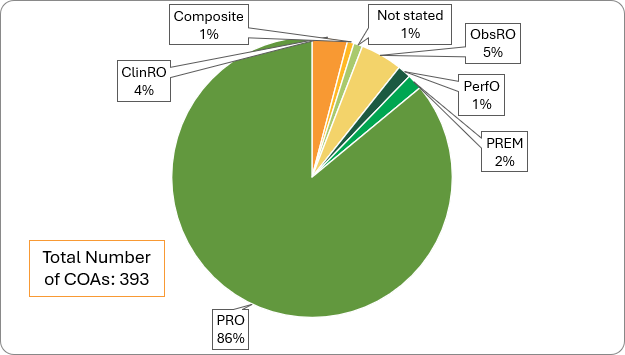
Figure 1: Types of COA that DIF analysis was conducted on
Therapeutic Areas and Concepts Measured
Mental health and Psychological Functioning
COAs were most frequently used in non-disease specific contexts, typically the general population (n=88/23%), followed by mental disorders (n=69/18%) and nervous system disorders (n=46/12%). Psychological functioning was the most common concept assessed (n=175/34%), followed by signs and symptoms (n=94/18%), and physical functioning (n=72/14%) – see figure 2.
A key reason for this pattern may be that some mental health constructs are not directly observable [19], meaning that differences in interpretation or symptom expression can be more likely to introduce DIF. Symptoms linked to mental health and nervous system disorders (e.g. Parkinson’s or motor neuron disease) also often manifest differently across demographic groups [20]. Our findings echo Teresi et al.’s 2008 review which likewise found DIF in many depression-related PROs [8].
Rare diseases
Studies involving rare diseases were largely absent (n=9/2.3%), which was expected as quantitative DIF analyses typically require large sample sizes and are often impractical in rare disease contexts [21]. Given this limitation, qualitative DIF methods as outlined by Coles et al., 2022 for the KCCQ, may be a promising approach for rare-disease COAs [6].
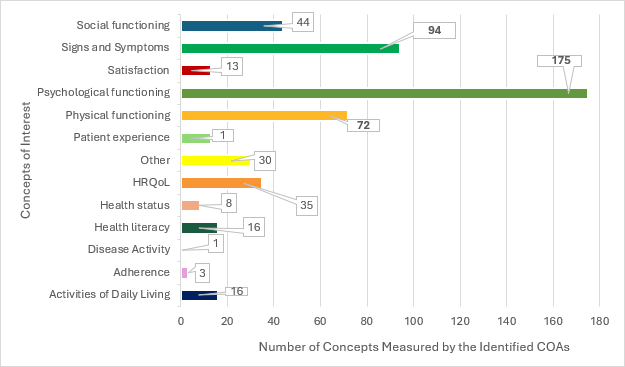
Figure 2: Concepts of interest measured by identified COAs
DIF Sub-group Analysis
Age, gender, and sex were the most common subgroup comparisons (n=181/47%, n=125/33%, and n=104/27% respectively). Their prominence was expected since these data are routinely collected and often required by regulators30. These variables are also known modifiers of health status and treatment response meaning that assessing DIF is important for identifying problematic items and strengthening the validity evidence for specific contexts of use31-32.
In contrast, relatively few studies examined DIF by race/ethnicity (n=41/11%). Studies that did so followed similar patterns to other subgroups. For example, most were PROs (n=30/73%), measured psychological functioning (n=21/51%), and involved mental health (n=8/20%) and nervous system disease (n=7/17%) populations. Of note, the limited use of race/ethnicity subgroups mirrors findings from Teresi et al, 20088. Given the established importance of examining DIF for race/ethnicity33-34, COA researchers could reflect on including such analysis before using a COA to ensure it is fit-for-purpose in diverse populations.
Limitations
As an exploratory study, our search was restricted to PubMed and we chose to select full text articles to maximize classification accuracy. Future work could examine whether our findings would be comparable in other databases, grey literature, and non-freely available publications. We also did not classify the type of method used beyond whether the approach was quantitative or qualitative.
Even with these limitations, our findings highlight several areas for greater reflection and action by COA researchers. Our broad inclusion criteria also supports insights across a wide range of COA types and applications.
Implications for COA Researchers
- Reflecting on whether your study population of interest may respond or interpret items differently due to reasons beyond the underlying trait being measured, and whether DIF analysis may be relevant.
- Using qualitative DIF approaches when quantitative methods are not feasible, such as in rare disease research or small sample contexts.
- Applying DIF findings to refine or revise items where appropriate, strengthening validity evidence across diverse patient groups.
Conclusions
This review suggests that although DIF is being assessed in some COA research, its application remains limited and further research is required to understand current practices. DIF research is concentrated in a relatively small set of therapeutic areas, and the COAs examined largely measure a narrow range of concepts. Broader and more systematic DIF detection could help COA researchers align with FDA recommendations, strengthen validity evidence, and ensure COAs measure concepts as intended across diverse patient groups.
Thank you to Tilly Stott and Nadine Kraft for their contributions to this article.
References
- Chen, WH., Revicki, D. Differential Item Functioning (DIF). In: Michalos, A.C. (eds) Encyclopedia of Quality of Life and Well-Being Research. 2014. Springer, Dordrecht. https://doi.org/10.1007/978-94-007-0753-5_728.
- Scott NW, Fayers PM, Aaronson NK, Bottomley A, de Graeff A, Groenvold M, Gundy C, Koller M, Petersen MA, Sprangers MA; EORTC Quality of Life Group and the Quality of Life Cross-Cultural Meta-Analysis Group. Differential item functioning (DIF) analyses of health-related quality of life instruments using logistic regression. Health Qual Life Outcomes. 2010 Aug 4;8:81.
- Wild D, Eremenco S, Mear I, Martin M, Houchin C, Gawlicki M, Hareendran A, Wiklund I, Chong LY, von Maltzahn R, Cohen L, Molsen E. Multinational trials-recommendations on the translations required, approaches to using the same language in different countries, and the approaches to support pooling the data: the ISPOR Patient-Reported Outcomes Translation and Linguistic Validation Good Research Practices Task Force report. Value Health. 2009 Jun;12(4):430-40.
- Zumbo, B.D. Looking through the lens of Differential Item Functioning (DIF): Embracing the many ways of being human. The Score. 2025. Available at: https://www.apadivisions.org/division-5/publications/score/2025/10/differential-item-functioning [Accessed on 10-03-2026].
- Stover, A.M., McLeod, L.D., Langer, M.M. et al. State of the psychometric methods: patient-reported outcome measure development and refinement using item response theory. J Patient Rep Outcomes. 2019. 3, 50.
- Coles TM, Lucas N, McFatrich M, Henke D, Ridgeway JL, Behnken EM, Weinfurt K, Reeve BB, Corneli A, Dunlay SM, Spertus JA, Lin L, Piña IL, Bocell FD, Tarver ME, Dohse H, Saha A, Caldwell B. Investigating gender-based differential item functioning on the Kansas City Cardiomyopathy Questionnaire (KCCQ) using qualitative content analysis. Qual Life Res. 2023 Mar;32(3):841-852.
- Pagano IS, Gotay CC. Ethnic differential item functioning in the assessment of quality of life in cancer patients. Health Qual Life Outcomes. 2005 Oct 7;3:60.
- Teresi JA, Ramirez M, Lai JS, Silver S. Occurrences and sources of Differential Item Functioning (DIF) in patient-reported outcome measures: Description of DIF methods, and review of measures of depression, quality of life and general health. Psychol Sci Q. 2008;50(4):538.
- US Food and Drug Administration’s (FDA). Patient-Reported Outcome Measures: Use in Medical Product Development to Support Labeling Claims. 2009. Available at: https://www.fda.gov/regulatory-information/search-fda-guidance-documents/patient-reported-outcome-measures-use-medical-product-development-support-labeling-claims [Accessed on 06-03-2026].
- US Food and Drug Administration’s (FDA). Patient-Focused Drug Development: Selecting, Developing, or Modifying Fit-for-Purpose Clinical Outcome Assessments. 2025. Available at: https://www.fda.gov/regulatory-information/search-fda-guidance-documents/patient-focused-drug-development-selecting-developing-or-modifying-fit-purpose-clinical-outcome [Accessed on 06-03-2026].
- National Library of Medicine. Medical Subject Headings 2026 (MeSH). Available at: https://meshb.nlm.nih.gov/search. [Accessed 12-Jan-2026].
- Orphanet. Search for a rare disease. Available at: https://www.orpha.net/en/disease [Accessed 12-Jan-2026].
- Mapi Research Trust. PROQOLIDTM – via ePROVIDETM. Available at: https://eprovide.mapi-trust.org/advanced-search?database=proqolid. [Accessed 12-Jan-2026].
- European Medicines Agency (EMA). Patient experience data (PED) reflection paper. 2026. Available at: https://www.ema.europa.eu/en/patient-experience-data-ped-reflection-paper. [Accessed on 06-03-2026].
- PROMIS® Instrument Development and Validation Scientific Standards Version 2.0. 2013. Available at: https://www.healthmeasures.net/images/PROMIS/PROMISStandards_Vers2.0_Final.pdf [Accessed on 06-03-2026].
- Dazzi F, Fonzi L, Pallagrosi M, Duro M, Biondi M, Picardi A. Relationship Between Gender and Clinician's Subjective Experience during the Interaction with Psychiatric Patients. Clin Pract Epidemiol Ment Health. 2021 Dec 22;17:190-197.
- Markowitz DM. Gender and ethnicity bias in medicine: a text analysis of 1.8 million critical care records. PNAS Nexus. 2022 Aug 18;1(4):pgac157.
- Powers JH III, Patrick DL, Walton MK, et al. Clinician-reported outcome (ClinRO) assessments of treatment benefit: report of the ISPOR Clinical Outcome Assessment Emerging Good Practices Task Force. Value Health. 2017; 20(1):2-14.
- Wright AGC. Latent Variable Models in Clinical Psychology. In: Wright AGC, Hallquist MN, eds. The Cambridge Handbook of Research Methods in Clinical Psychology. Cambridge Handbooks in Psychology. Cambridge University Press; 2020:66-79.
- Duong T, Krosschell KJ, James MK, Nelson L, Alfano LN, Eichinger K, Mazzone E, Rose K, Lowes LP, Mayhew A, Florence J, King W, Senesac CR and Eagle M (2021). Consensus Guidelines for Improving Quality of Assessment and Training for Neuromuscular Diseases. Front. Genet. 12:735936.
- Professional society for health economics and outcomes research (ISPOR). Response to FDA about Patient Focused Drug Development: Selecting, Developing, or Modifying Fit-for-Purpose Clinical Outcome Assessments; Draft Guidance for Industry, Food and Drug Administration Staff, and Other Stakeholders. 2022. Available at: https://www.ispor.org/docs/default-source/strategic-initiatives/ispor-response-to-us-fda-pfdd-coa-september-2022.pdf?sfvrsn=55f67124_5 [Accessed on 10-03-2026].
- Clayton JA, Tannenbaum C. Reporting Sex, Gender, or Both in Clinical Research? JAMA. 2016;316(18):1863–1864.
- Janet W Rich-Edwards, Ursula B Kaiser, Grace L Chen, JoAnn E Manson, Jill M Goldstein, Sex and Gender Differences Research Design for Basic, Clinical, and Population Studies: Essentials for Investigators, Endocrine Reviews, Volume 39, Issue 4, August 2018, Pages 424–439.
- Penton, Hannah et al. An Investigation of Age-Related Differential Item Functioning in the EQ-5D-5L Using Item Response Theory and Logistic Regression. Value in Health, 2022. Volume 25, Issue 9, 1566 – 1574.
- Jones, R. N., Tommet, D., Ramirez, M., Jensen, R., & Teresi, J. A. Differential item functioning in Patient Reported Outcomes Measurement Information System® (PROMIS®) Physical Functioning short forms: Analyses across ethnically diverse groups. Psychological Test and Assessment Modeling, 2016. 58(2), 371–402.
- Moteane M. Critically exploring the use of race and ethnicity as grouping variables in studies that use or include differential item functioning analyses [dissertation]. Greensboro (NC): University of North Carolina at Greensboro; 2024.